- Λεπτομέρειες
- Stergios
- English

Pamphlet review edited and translated by Paul Pomonis Kate Sharpley Library, 26 pages
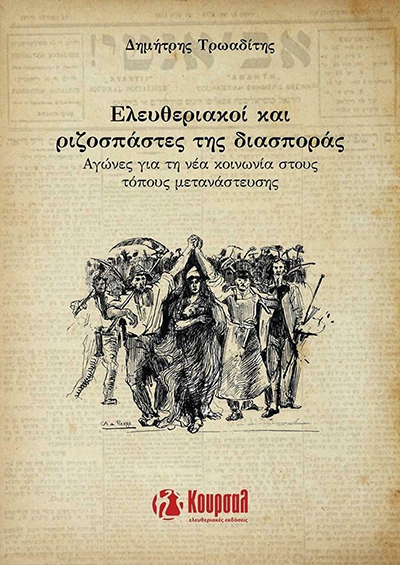
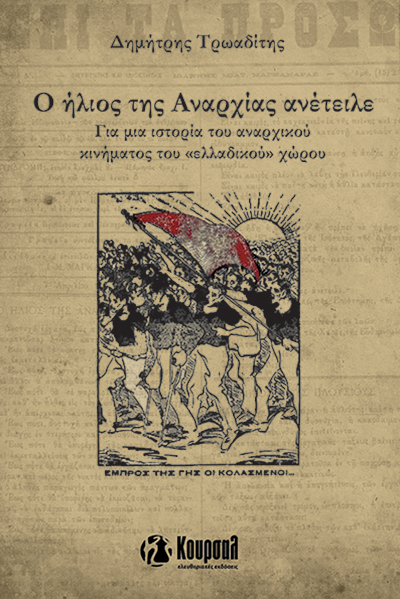
This pamphlet charts the emergence of anarchism in Greece from the 1860s when Emmanuel Daoudoglou, under the influence of the International Workingmen’s Association (First International) of Naples, where he was then staying, became an anarchist. The Russian anarchist Bakunin was living in the Naples area at the time. A number of other Greeks started developing anarchist ideas around the same time and this further developed with the influence of the Paris Commune of 1871.
Patras, a port town, had good links to Italy, and anarchists there were able to maintain links with anarchists from Italy and other parts of Europe. They attempted to form the first local section of the First International. State repression set back these endeavours for a decade. The Democratic Club of Patras included workers and intellectuals. It established contact with other groups and individuals throughout Greece. Soon after it produced a newspaper at least 4 of its members were imprisoned in 1877. Later they were acquitted of all charges against them but this caused some of them to retreat from further involvement. The remaining members had to work secretly during a long period of clandestine activity. Later on at the end of the 19th century/ beginning of the 20th century anarcho-syndicalist groups emerged. Although Greek anarcho-syndicalism never became a mass movement (like it did in several other countries) it contributed significantly to the first major strikes in Greece and worker’s organisation.
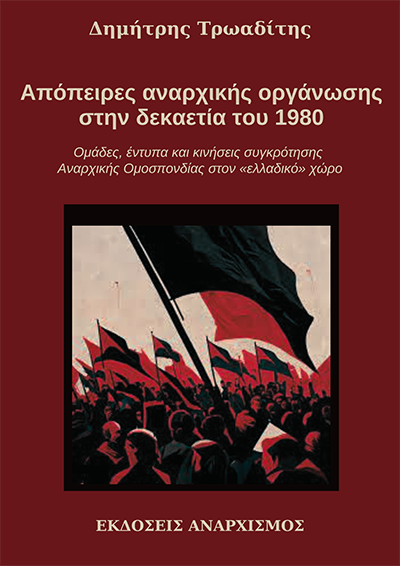
Groups like the League of Anarchist Workers of Athens emerged. Anarchists were also involved in strike activities in the Lavrio mines. Meanwhile anarchism was propagated among the peasants, especially in the Peloponneseus and Thessaly. Raisin workers organised large demonstrations as a result of many of them losing their jobs and anarchists were involved in demonstrations organised by them in Achaia and Ilia. The anarchists of Pyrgos were also involved in peasant revolts and organised public debates in the villages. However, reformist ideas became dominant in this period in Greek history, and anarchism never took off the way it had in other Mediterranean countries. This little known chapter of anarchist history describes the pioneers of anarchism in Greece, where a new anarchist movement began to emerge and grow after the fall of the Colonels’ dictatorship in the 70s.
*Published in “Organise” No 64
...- Λεπτομέρειες
- Stergios
- Αναρχική Θεωρία

“…Τόσο μας έχει διαστρεβλώσει όλους μια εκπαίδευση που από τη μικρή ηλικία προσπαθεί να σκοτώσει μέσα μας το πνεύμα της επανάστασης και να αναπτύξει το πνεύμα της υποταγής στην εξουσία (…)
…Η δουλοπρέπεια μπροστά στο νόμο έχει γίνει αρετή (…)
…Βλέπουμε, τον δεσμοφύλακα που χάνει σιγά-σιγά κάθε ανθρώπινο συναίσθημα, τον χωροφύλακα που είναι εκπαιδευμένος σα σκυλάκι του τσίρκου, τον χαφιέ που καμαρώνει, την κατάδοση που έχει μετατραπεί σε αρετή, τη διαφθορά που έχει γίνει καθεστώς ‘ όλα τα ελαττώματα, όλες οι κακές πλευρές της ανθρώπινης φύσης, ευνοούνται και καλλιεργούνται για το θρίαμβο του Νόμου.(…) …Ο Ν ό μ ο...
- Λεπτομέρειες
- Stergios
- English

[The following piece was written by a Greek Marxist-Leninist historian, Giannis Kordatoq, and is part of the thirteenth chapter in his History of the Greek Workers Movement (Athens 1931). The book covers the period from 1880 up to 1920 and despite some distortions, snide remarks and patronisation he cannot deny the great influence of the Greek anarchist movement.
In the period covered the Greek worker was spread across the Balkans and the Middle East, and like the Spanish worker of later years, spread their knowledge and the activity of socialism, which in those days was generally anarchism. In almost all cases...
- Ιταλικές αναρχικές εφημερίδες και περιοδικά στην Αίγυπτο
- Ερρίκο Μαλατέστα, Η ιδιοκτησία
- Felix Carrasquer Launed: Αναρχοσυνδικαλιστής και συγγραφέας
- Angella Beallor, Ο σεξισμός στο Αναρχικό κίνημα
- Αργεντινή: Συνέντευξη με έναν αναρχικό σύντροφο
- Γιώργος Μπουρλής, Η αλύγιστη Lucy Parsons
- Η Ιταλία και η Πλατφόρμα - Η ιταλική συμμετοχή στη συζήτηση σχετικά με την «Οργανωτική Πλατφόρμα»

Στο κτήριο της Ελληνικής κοινότητας της Μελβούρνης στις 18/07/2019
Με τον Ελευθεριακό στο Αυτοδιαχειριζόμενο Στέκι Πέρασμα, 22/01/2018